
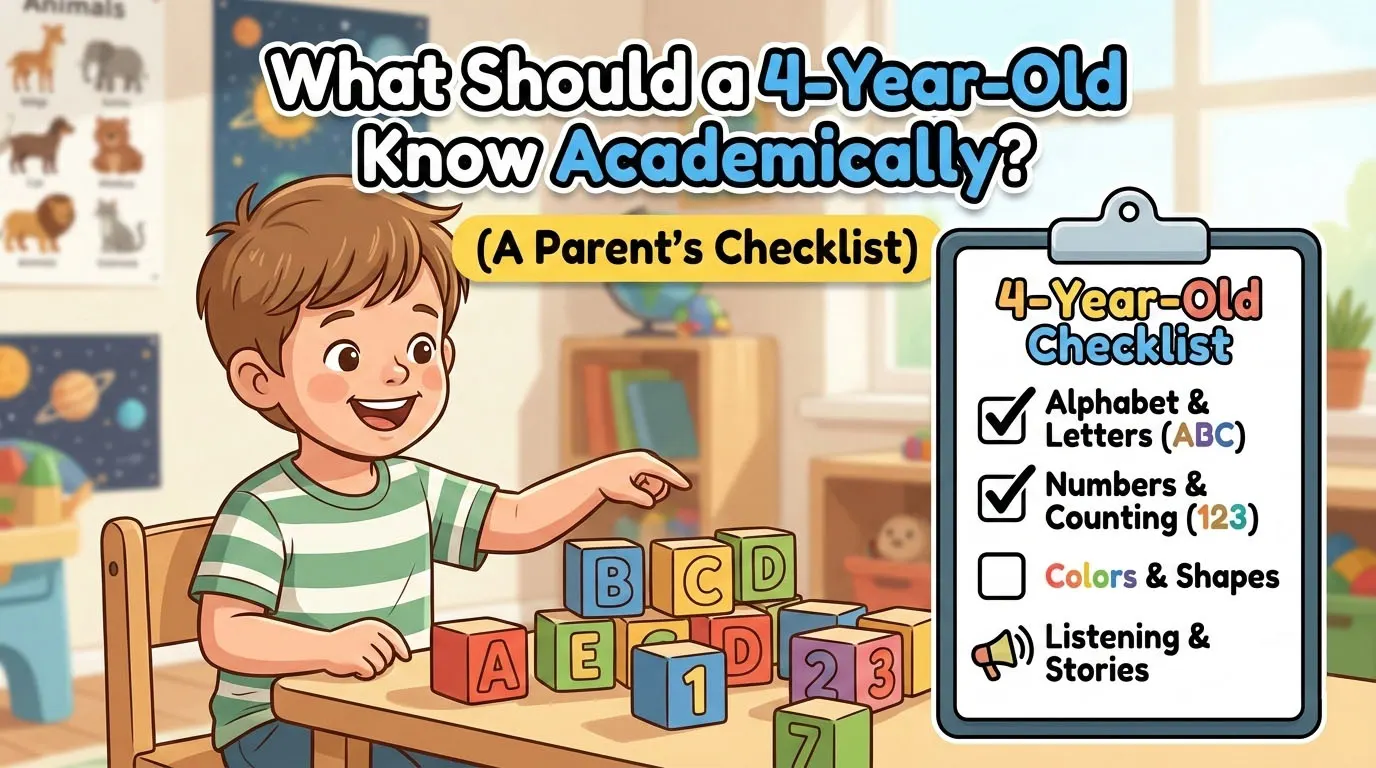
Turning four is a magical milestone. It is the age where toddlers transition into “big kids,” filled with curiosity, questions, and endless energy.
As a parent, it is natural to wonder:
Is my child ready for school?
What should they actually know by now?
At Guru At Home, we believe early online tutoring is not about pressure; it is about building a strong, happy foundation.
While every child develops at their own unique pace, knowing the common milestones can help you support their growth with confidence.
We have put together this simple academic checklist to help you understand the skills—from counting to kindness—that set the stage for kindergarten success.
1. Language & Communication Skills
Communication is the bridge to learning. By age four, many children can:
- Speak in full sentences: They can use sentences of 5 to 6 words to clearly express their wants and needs.
- Ask and answer simple questions: They understand “who,” “what,” and “where” and enjoy asking “why?”
- Use future tense: They understand the concept of time, using phrases like “I will go to the park later.”
- Retell parts of stories: They can recall the beginning, middle, and end of a favorite book or recent event.
- Follow conversation rules: They are learning to listen when others speak and wait for their turn to talk.
2. Early Literacy Skills
Early reading begins with a love for books. By age four, many children:
- Enjoy listening to books: They can sit for a short story and engage by pointing at pictures or asking questions.
- Understand print has meaning: They realize that the words on the page are telling the story, not just the pictures.
- Recognize some letters: They can identify the first letter of their name and a few other common letters.
- Match sounds with letters: They are beginning to hear that the letter “B” makes the /b/ sound.
- Pretend to read: They hold the book correctly and use the pictures to tell the story in their own words.
3. Early Writing Skills
Writing starts with hand strength and coordination. Children build skills such as:
- Holding a crayon correctly: They are moving away from a fist grip to using their thumb and fingers (tripod grip).
- Drawing simple shapes: They can copy basic shapes like circles, squares, and crosses.
- Writing their name: They may write their first name, even if some letters are backward or uneven.
4. Early Math Concepts
Math is about more than just counting. Foundational skills often include:
- Counting objects to ten: They can point to items one by one and count them correctly up to at least ten.
- Recognizing numbers: They can identify written numerals (like seeing a “5” on a bus) in the real world.
- Recognizing shapes: They can name common 2D shapes like circles, squares, triangles, and rectangles.
- Comparing quantities: They understand concepts of measurement, using words like “more,” “less,” “bigger,” and “smaller.”
- Sorting objects: They can group items together based on a single rule, such as color, size, or shape.
5. Social & Emotional Skills
Confidence helps children learn better. Many four-year-olds can:
- Play cooperatively: They start to play with other children rather than just alongside them.
- Use words to solve conflicts: They are learning to say “please stop” or “my turn” instead of pushing or grabbing.
- Follow rules and routines: They understand classroom structures, like circle time or cleaning up after play.
- Express feelings: They can use words to explain if they feel happy, sad, mad, or scared.
- Show pride: They enjoy showing off their work and saying, “Look what I did!”
6. Motor & Classroom Readiness Skills
Physical skills help children navigate a classroom. Children often develop:
- Using safety scissors: They can hold scissors correctly and snip paper with supervision.
- Running and climbing: They move with confidence, showing good balance and coordination on the playground.
- Self-care independence: They can handle bathroom needs, wash hands, and manage easy buttons or zippers.
- Sitting and listening: They can pay attention to a teacher or activity for 5 to 10 minutes without getting distracted.
7. Thinking & Problem-Solving Skills
Cognitive skills help children process information. These include:
- Following two-step instructions: They can remember and do two things, like “Pick up your toy and put it in the box.”
- Naming colors and objects: They have a growing vocabulary for the world around them.
- Understanding “same” and “different”: They can look at two objects and tell you how they match or how they are unique.
- Solving simple puzzles: They can complete wooden peg puzzles or floor puzzles with 12 to 24 pieces.
Parent Tips to Support These Skills
- Read aloud daily: Make storytime a calm, consistent part of your bedtime routine.
- Count everything: Count stairs, apple slices, or red cars while you are out and about.
- Play word games: Practice rhyming words like “cat, hat, bat” while driving or cooking.
- Encourage independence: Let them try to zip their own jacket before you step in to help.
- Schedule playdates: Give them chances to practice sharing and talking with friends.
Final Notes
These skills reflect common early childhood learning goals. Remember, children grow at their own pace, and it is normal for skills to develop at different times. If you have questions about your child’s progress, personalized support can help build strong foundations in a fun way.
How Guru At Home Supports Early Learners
Guru At Home offers personalized online tutoring designed specifically for young children, including four-year-olds. Our one-to-one sessions focus on early language, reading readiness, math foundations, and confidence-building through engaging, age-appropriate activities.If you are looking for structured and supportive online learning to get your child ready for school, Guru At Home is here to help.